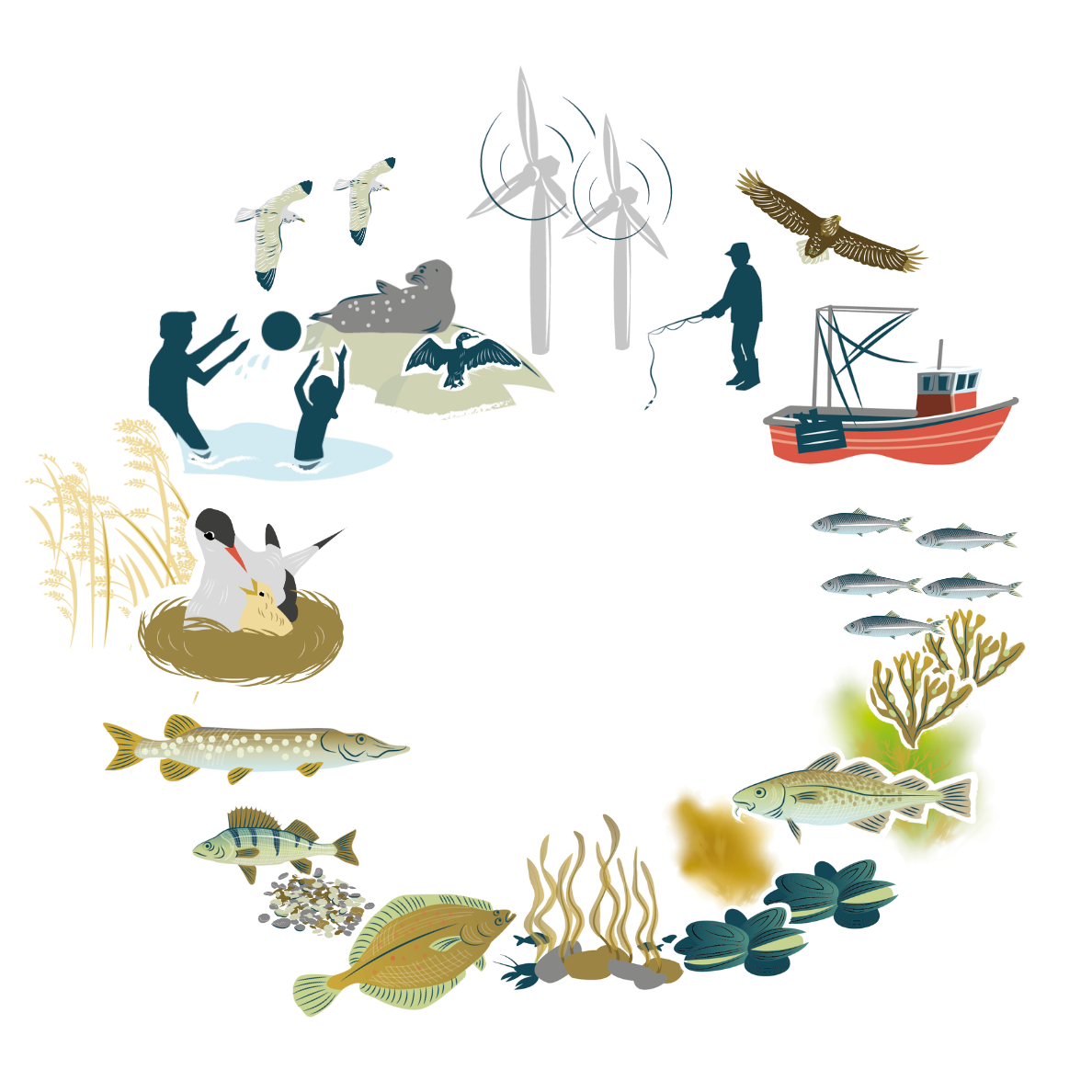
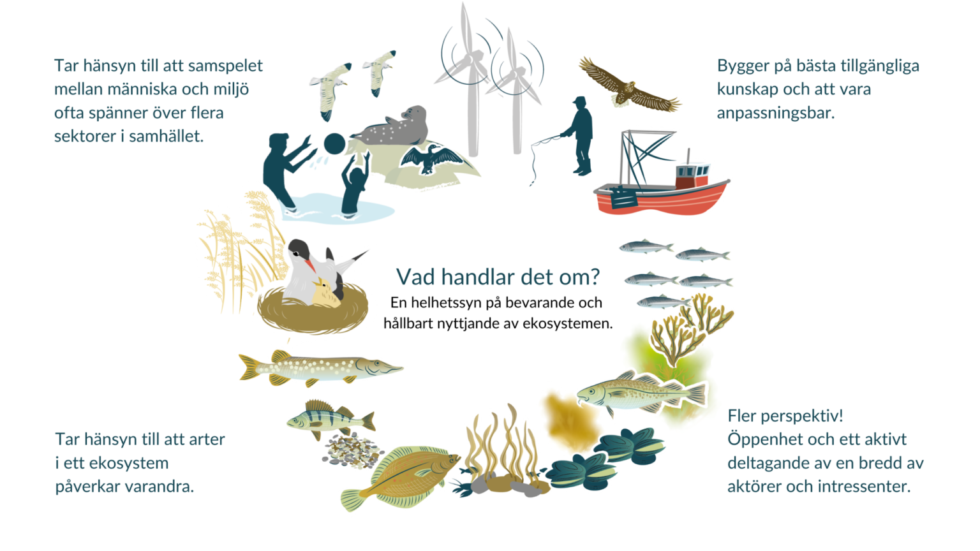
How can we become better at taking care of Hanö Bay – not question by question, but by seeing the sea, the coast, the waterways, and the people around as a whole? This is the fundamental idea behind the work with ecosystem-based marine management, EBHF, in Hanö Bay.
EBHF is not a new authority or organization, but a method for creating collaboration, learning, and concrete actions within the framework of the management that already exists. The working method complements ordinary structures and is based on the place, the ecosystem, and the people and activities that affect and are affected by the marine environment.
Instead of starting in different authorities' areas of responsibility, the idea is to start from the regional and local needs and then connect them with management at local, regional, and national levels. When researchers, experts, authorities, and local actors share knowledge and perspectives, both decisions and actions can become better anchored and more effective. The ultimate goal is a balanced sea and a vibrant coast and archipelago.
The work with EBHF is conducted in six regional areas in Sweden. Southern Botten Sea, Stockholm Archipelago, and 8+fjords in Bohuslän have been pilot areas. In 2026, three new areas will be established: Hanö Bay, Kattegatt, and the southern east coast archipelagos. Experiences from the pilot areas have also been compiled in a handbook about the method and working approach.
A meeting place for many different perspectives
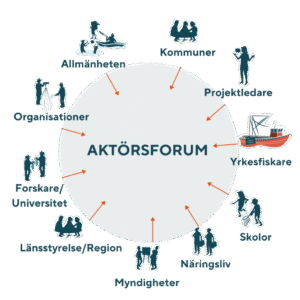
An important part of the work in Hanö Bay is Actor Forum Hanö Bay – a recurring meeting place where municipalities, authorities, researchers, associations, companies, and other engaged parties can meet around Hanö Bay's marine and coastal environment. The idea is both to gather the broad circle of actors and to form smaller working groups around issues where there is a need and willingness to move forward.
Already at a digital pre-meeting in June 2026, about 40 participants gathered to discuss what EBHF could mean specifically in Hanö Bay. Six overarching areas crystallized: collaboration and organization, biodiversity, eutrophication and water quality, fish and fishing, sustainable boating and tourism, as well as engagement, communication, and participation.
From conversation to action
On September 3, it was time for the first physical actor forum at Kulturkvarteret in Kristianstad. The goal was to strengthen networks, create a broader common picture of Hanö Bay, and above all, start to concretize which issues the participants want to work on together.
Part of the day was a mini-fair where we could choose two of the participating actors and hear more about what they are currently working on. Present were Blekinge Archipelago, Kristianstad Water Kingdom, the County Administrative Board of Skåne, the County Administrative Board of Blekinge, Blekinge Coastal Water and Air Quality Association, and Marine Center.
I chose to listen to Kristianstad Water Kingdom, which among other things talked about youth engagement around the Baltic Sea, nature-based solutions, stone reefs and bladder wrack, wetlands and rewetting, as well as the work with pike habitats.
At Skåne County Administrative Board we heard about, among other things, EU directives, action work against eutrophication, LIFE projects, area protection, and fisheries policy. Just the two stops provided a fairly good picture of the breadth of the issues – from concrete conservation measures to legislation and management at regional, national, and European levels.
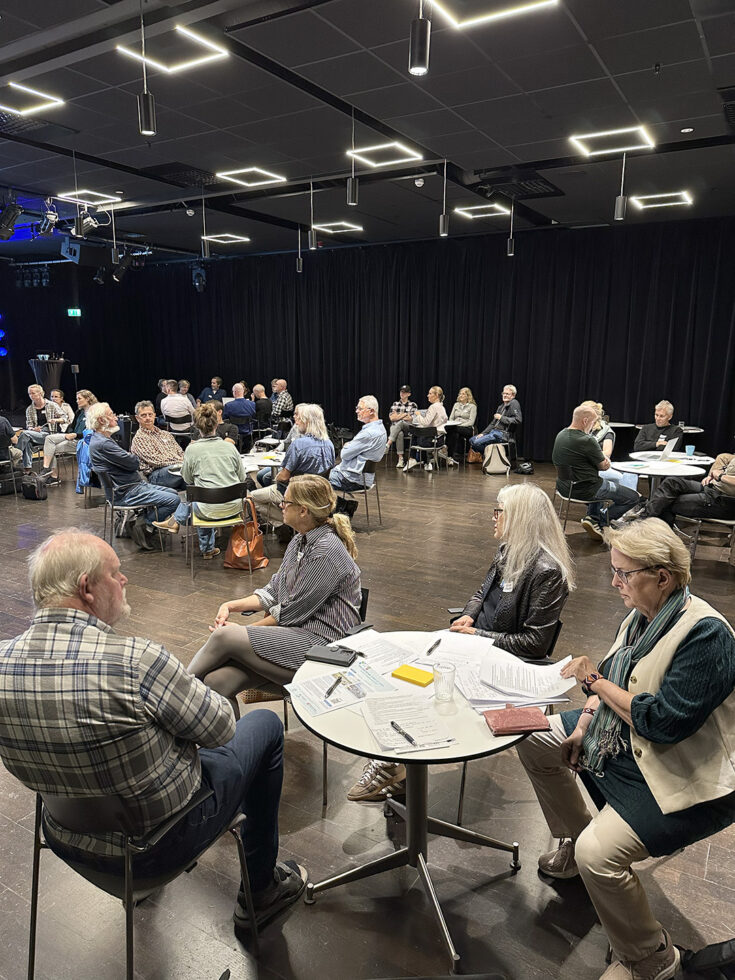
When it was time for group work, I, as a representative of Leader Eastern Skåne, chose the group ’Create engagement and participation for Hanöbukten’. Participants included people from Collaboration for Hanöbukten, Marine Center, and the cultural sector.
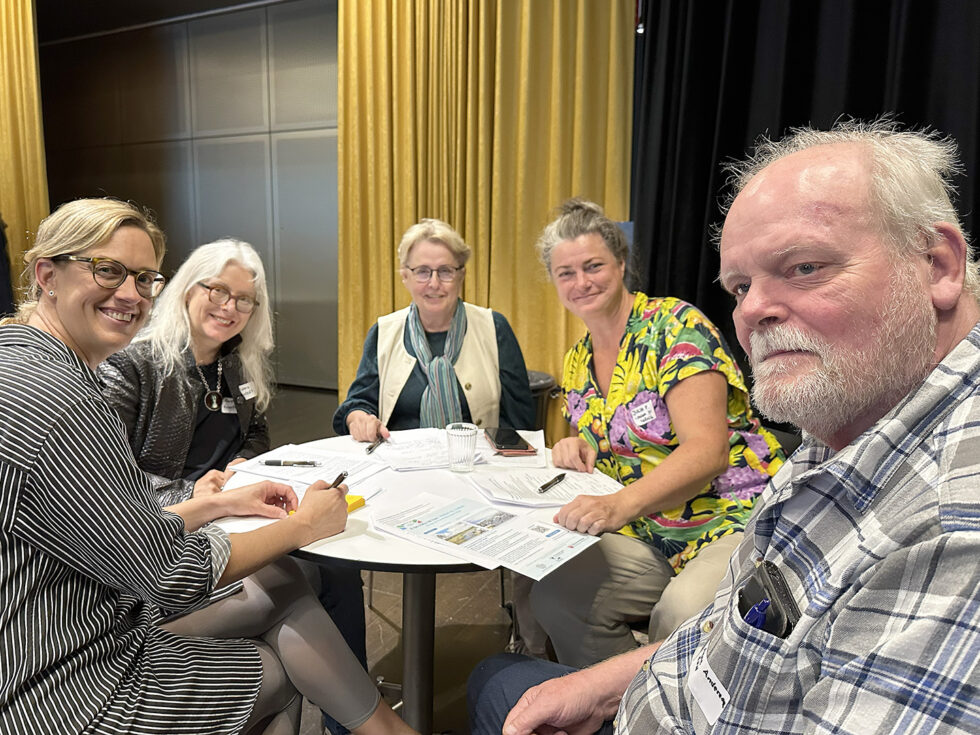
My working group from left: Madeleine Lundin (Marine Center, Simrishamn), Malena Olsson (artist, Kristianstad), Annelie Worgard (Collaboration for Hanöbukten, SfH), Julia Falkman (Leader Eastern Skåne), Agne Andersson (Collaboration for Hanöbukten, SfH).
Our discussion revolved a lot around how we reach beyond those who are already engaged in marine issues. Knowledge recurred as a key – from schools all the way up to municipal politics – but also the need for new meeting places and contexts. We talked about, among other things, involving the business sector, using culture as a way into marine issues, and communicating both the problems that exist and the solutions and positive examples that can actually be built upon.
Several concrete ideas emerged: training for politicians, an ambassadorship for Hanöbukten, citizen research, developing Hanöbukten week, and creating more meetings between culture and environment. The group's most important conclusion became that knowledge and new meeting places are two keys to broader engagement for Hanöbukten.
The conversations during the day also resulted in seven thematic groups around, among other things, coastal ecosystems, fish resources, eutrophication, water quality, sustainable boating, and engagement. The groups will continue the work between the stakeholder forums and identify concrete issues and actions.
In our group, a first step will be to map target groups, actors, and existing events. We will also develop the idea of a special training for politicians.
Do you want to join?
The work is open to more. A fundamental idea with EBHF is to gather many different perspectives, and new actors who can contribute to the work are welcome. The future of Hanöbukten is not just a question for marine experts. It concerns municipalities and businesses, associations and researchers, farmers and foresters, the tourism industry, cultural actors, schools, politicians – and all of us who live, work, or spend time in the area.
The next Stakeholder Forum Hanöbukten will be held digitally on the morning of November 10, and anyone who wants to engage is welcome to participate.
There are also several other ways to follow the work. Every Tuesday at 8:30–9:15 a digital breakfast seminar series is held with experts and practitioners in various parts of the marine environment area. The seminars can also be viewed afterwards. Among previous themes are marine law, EU law, and the environmental impact of shipping, the effects of fishing on the ecosystem, as well as boat bottom paint and the environment.
On ebhf.se there is more information, knowledge material, the handbook on EBHF and the calendar with upcoming activities. There are also the breakfast seminars collected. Additionally, there is a Facebook group for ecosystem-based marine management. Knowledge, seminars, and the common collaboration space were also highlighted at the start as a way to stay involved in the work.
Those who want to know more about the work in Hanöbukten or participate in upcoming activities can contact Cathrine Casimir, operations manager for EBHF Hanöbukten, at cathrine.casimir@simrishamn.se or 0414-819 117.
For that is perhaps where the strength lies: not in everyone thinking alike, but in people with different knowledge, experiences, and perspectives actually meeting – and starting to do things together.
See Hanöbukten from above and below the surface
The film about Hanöbukten was produced in 2022 as part of a project by Leader Skånes Ess.
TEXT: Julia Falkman, Leader Östra Skåne, September 2026